We take your privacy very seriously and when you visit our website, please agree to all cookies used. For more information about the processing of personal data, you may access to Privacy Statement

array(31) { ["id"] => string(2) "16" ["pid"] => string(1) "0" ["siteid"] => string(1) "1" ["modelid"] => string(1) "1" ["cate_modelid"] => string(2) "20" ["name"] => string(8) "About Us" ["subname"] => string(8) "About Us" ["url"] => string(19) "/about-us/about-gim" ["command"] => string(1) "1" ["position"] => string(7) "0,1,0,0" ["usedata"] => string(0) "" ["usecategory"] => string(1) "1" ["sort"] => string(1) "8" ["create_time"] => NULL ["update_time"] => NULL ["danye"] => string(1) "0" ["open"] => string(1) "0" ["use_categoryid"] => NULL ["ext_data"] => string(7) "array()" ["single"] => string(1) "0" ["keywords"] => string(8) "About Us" ["description"] => string(8) "About Us" ["page"] => string(0) "" ["can_static"] => string(1) "1" ["path"] => string(2) "16" ["static_name"] => string(0) "" ["seo_title"] => string(8) "About Us" ["custom_url"] => string(8) "about-us" ["spec_modelid"] => string(1) "0" ["route"] => string(0) "" ["route_inner"] => string(0) "" }
array(31) { ["id"] => string(2) "24" ["pid"] => string(2) "16" ["siteid"] => string(1) "1" ["modelid"] => string(1) "1" ["cate_modelid"] => string(2) "21" ["name"] => string(4) "News" ["subname"] => string(4) "News" ["url"] => string(27) "/about-us/news/company-news" ["command"] => string(1) "1" ["position"] => string(7) "0,1,0,0" ["usedata"] => string(0) "" ["usecategory"] => string(1) "1" ["sort"] => string(1) "1" ["create_time"] => NULL ["update_time"] => NULL ["danye"] => string(1) "0" ["open"] => string(1) "0" ["use_categoryid"] => NULL ["ext_data"] => string(7) "array()" ["single"] => string(1) "0" ["keywords"] => string(4) "News" ["description"] => string(4) "News" ["page"] => string(0) "" ["can_static"] => string(1) "1" ["path"] => string(5) "16,24" ["static_name"] => string(0) "" ["seo_title"] => string(4) "News" ["custom_url"] => string(4) "news" ["spec_modelid"] => string(1) "0" ["route"] => string(0) "" ["route_inner"] => string(0) "" }
array(31) { ["id"] => string(3) "275" ["pid"] => string(2) "24" ["siteid"] => string(1) "1" ["modelid"] => string(2) "36" ["cate_modelid"] => string(2) "21" ["name"] => string(21) "Industry Applications" ["subname"] => string(21) "Industry Applications" ["url"] => string(26) "/about-us/news/application" ["command"] => string(1) "1" ["position"] => string(7) "0,1,0,0" ["usedata"] => string(0) "" ["usecategory"] => string(1) "1" ["sort"] => string(1) "1" ["create_time"] => NULL ["update_time"] => NULL ["danye"] => string(1) "0" ["open"] => string(1) "0" ["use_categoryid"] => NULL ["ext_data"] => string(7) "array()" ["single"] => string(1) "0" ["keywords"] => string(21) "Industry Applications" ["description"] => string(21) "Industry Applications" ["page"] => string(1) "6" ["can_static"] => string(1) "1" ["path"] => string(9) "16,24,275" ["static_name"] => string(0) "" ["seo_title"] => string(21) "Industry Applications" ["custom_url"] => string(11) "application" ["spec_modelid"] => string(1) "0" ["route"] => string(14) "/Cn/Lists/news" ["route_inner"] => string(22) "/Cn/Lists/news_detail/" }
Release Time 2025-12-05
Let’s be honest, technology that lets you see heat sounds like something straight out of a sci-fi movie, doesn’t it? One moment you’re looking at an unremarkable wall or a humming piece of machinery, and the next, you’re presented with a vivid, color-coded map of temperature. This isn’t magic; it’s infrared thermography. But this technology has moved far beyond its origins. It’s no longer just a tool for dramatic rescue scenes; it’s a fundamental pillar of modern science and industry. Today, we’re pulling back the curtain on the four major applications where infrared thermal imagers are not just useful, but utterly transformative.
Before we dive into the applications, let’s get our bearings. What exactly are we talking about? Every object with a temperature above absolute zero emits infrared radiation—a form of invisible light that carries heat. Our eyes can’t see it, but thermal imagers can. These devices use specialized sensors to detect this radiation and translate it into a visible image, where different colors represent different temperatures. It’s like giving someone superhuman vision, allowing them to see energy loss, impending failures, and biological processes in real-time.
Imagine if you could peer inside a running engine, a high-voltage electrical panel, or a complex production line and instantly spot the component that’s working too hard and is about to fail. That’s the superpower of thermal imaging in industrial settings.
Electrical systems are a prime candidate for thermal inspection. A loose connection, an overloaded circuit, or a failing component will generate excess heat long before it bursts into flames or causes a catastrophic outage. A thermographer can scan an entire electrical room or substation from a safe distance, identifying these "hot spots" with pinpoint accuracy. This allows for repairs during planned downtime, preventing fires, costly equipment damage, and unplanned production halts. It’s the ultimate form of preventive care for the nervous system of any factory or power grid.
In the world of moving parts, friction is the enemy. A bearing that’s beginning to fail, a motor that’s misaligned, or a pump that’s operating under strain will all exhibit abnormal thermal signatures. Thermal imagers make these issues starkly obvious. A hot bearing in a conveyor system or an overheating gearbox in a wind turbine stands out like a sore thumb on a thermal display. This enables maintenance teams to intervene precisely when needed, maximizing equipment lifespan and avoiding the domino effect of a single failure bringing an entire production line to a grinding halt.
Beyond failure prevention, thermal imaging is a powerful process monitor. In manufacturing, consistent temperature is often key to quality. Think of plastic molding, glass tempering, or circuit board soldering. A thermal imager can provide a real-time, non-contact temperature map of a product on a fast-moving line, ensuring every item is processed correctly. It’s a silent, efficient quality inspector that never touches the product.
Your building is talking to you. It’s telling you where it’s leaking money in the form of heated or cooled air. The problem? It’s speaking in whispers of escaping heat and drafts of cold air that you can’t see or feel. Enter the thermal imager, the ultimate translator for your building’s secret language.
This is perhaps the most visually striking application. On a cold day, a thermal survey of a building’s exterior will clearly show where warm indoor air is escaping—around windows, through poorly insulated walls, or via attic spaces. These thermal bridges and insulation gaps are highlighted in bright yellows and reds against the cooler, bluer walls. The result? A precise roadmap for weatherization efforts. Instead of guessing where to add insulation, contractors can target their work, maximizing energy savings and improving occupant comfort.
Water is a building’s nemesis. Thermal imagers can detect moisture trapped within walls or under roofing membranes because water retains and releases heat differently than dry materials. A wet patch in a flat roof will cool down at a different rate than the dry surrounding area after sunset, revealing its location clearly to a thermal camera. This allows for precise, minimally invasive repairs, preventing mold growth and structural decay.
Beyond nuts and bolts, thermal imaging is a critical tool for discovery and healing, pushing the boundaries of what we can observe in both the natural world and the human body.
Researchers use thermal imaging to study animals without disturbing them. They can track wildlife at night, monitor the health of livestock by detecting inflammation or infection, and observe the thermal physiology of everything from insects to large mammals. In botany, scientists study plant transpiration and stress responses by visualizing leaf temperature. It’s a completely non-invasive window into biological processes.
While not a standalone diagnostic tool, thermal imaging is a valuable adjunct in medicine. It can map surface blood flow and inflammation. Conditions like deep vein thrombosis, certain circulatory disorders, and inflammatory arthritis can cause distinct thermal patterns. In veterinary medicine, it’s especially useful for locating injuries in animals that can’t verbalize their pain, such as pinpointing a strained tendon in a racehorse or a sore joint in a household pet.
This is where thermal imaging meets the cutting edge, driving innovation in some of the most competitive fields.
High-end vehicles have long featured thermal night vision systems. These systems, often using specialized thermal cores, can detect pedestrians, cyclists, and animals far beyond the range of headlights, in total darkness, and through visual obscurants like light fog or dust. This is a critical enhancement for Advanced Driver-Assistance Systems (ADAS), moving us closer to a future of autonomous vehicles that must "see" in all conditions.
In R&D labs everywhere, thermal imaging is indispensable for prototyping and testing. Electronics designers use it to validate thermal management on new circuit boards. Aerospace engineers monitor heat distribution on prototype components. Material scientists study thermal conductivity and reactions. It provides immediate, visual feedback that other sensors cannot, accelerating the innovation cycle.
Now, having explored these vast applications, a question arises: who powers this versatility? Meeting the wildly different needs of a power line inspector, a building scientist, and an automotive R&D team requires more than a one-size-fits-all camera. This is where specialized expertise and flexible manufacturing become critical.
This is precisely the niche of Guide Intelligent Manufacturing (GIM), a brand of Wuhan Guide Sensmart Tech Co., Ltd., affiliated to the renowned Guide Infrared Group. GIM focuses squarely on thermal imaging intelligent manufacturing. Their mission? To bridge the gap between groundbreaking thermal technology and its real-world, practical application across a staggering array of fields.
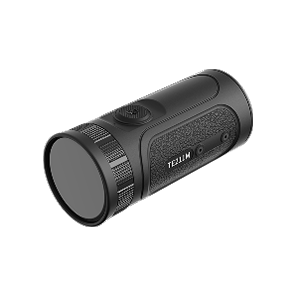
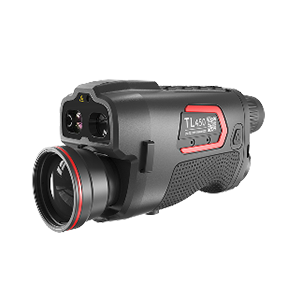
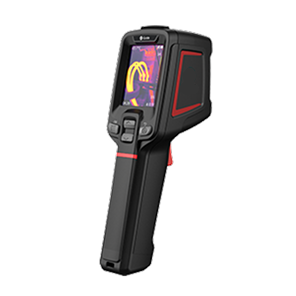
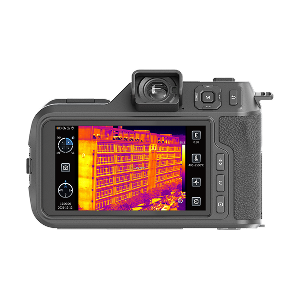
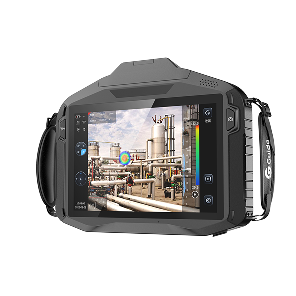
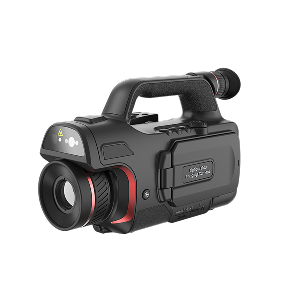
GIM doesn’t just sell off-the-shelf products. They are committed to providing personalized OEM/ODM customization services and cost-effective optoelectronic product solutions. Think about that. Whether you’re a brand in the outdoor sports sector needing a compact, rugged thermal scope, an industrial player requiring a specialized high-temperature imager for furnace inspection, or a startup in the scientific research field building a custom multispectral device, GIM can build it.
Their strength lies in a powerful foundation: an end-to-end infrared industry chain, proprietary core technologies, and large-scale production capabilities. This vertical integration means they control the process from the core detector technology onwards, allowing them to excel in quickly meeting the diverse demands of industries including outdoor sports, power utilities, industrial manufacturing, building HVAC systems, automotive repair, and scientific research.
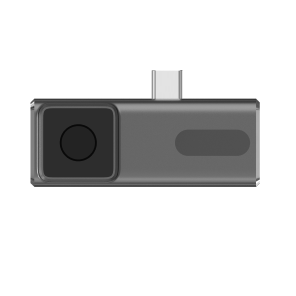
Their specialization in tailored development of thermal imaging solutions—from night vision devices and professional thermography cameras to consumer-grade thermal imaging cameras and multispectral equipment—means they are the silent partner for innovators. They provide the reliable, customized "eyes" that allow other industries to see the invisible, transforming the science of infrared into practical, life- and business-improving solutions.
From preventing industrial accidents to saving energy in our homes, from advancing medical science to building smarter cars, infrared thermal imagers have quietly revolutionized how we interact with the physical world. They’ve transformed temperature from a number on a gauge into a rich, visual language that tells stories of efficiency, safety, and health. As the technology becomes more accessible and companies like GIM make advanced, customized solutions available to more sectors, this "heat vision" will only become more deeply woven into the fabric of modern life. The next time you feel a draft from a window or wonder if your car’s engine is running smoothly, remember: there’s already a technology that can see exactly what’s going on, and it’s helping to build a safer, more efficient, and more insightful world.
Prev
Next
Related Reading
Beyond the Glow: The Four Pivotal Applications of Infrared Thermal Imagers Shaping Our World
How Infrared Thermal Imagers are Revolutionizing Automotive Robot Welding?
How Guide Intelligent Manufacturing's Thermal Imagers Are Revolutionizing High-End Scientific Research?