We take your privacy very seriously and when you visit our website, please agree to all cookies used. For more information about the processing of personal data, you may access to Privacy Statement

253-50.jpg 行业应用
  • Home
  • array(31) {
      ["id"] => string(2) "16"
      ["pid"] => string(1) "0"
      ["siteid"] => string(1) "1"
      ["modelid"] => string(1) "1"
      ["cate_modelid"] => string(2) "20"
      ["name"] => string(8) "About Us"
      ["subname"] => string(8) "About Us"
      ["url"] => string(19) "/about-us/about-gim"
      ["command"] => string(1) "1"
      ["position"] => string(7) "0,1,0,0"
      ["usedata"] => string(0) ""
      ["usecategory"] => string(1) "1"
      ["sort"] => string(1) "8"
      ["create_time"] => NULL
      ["update_time"] => NULL
      ["danye"] => string(1) "0"
      ["open"] => string(1) "0"
      ["use_categoryid"] => NULL
      ["ext_data"] => string(7) "array()"
      ["single"] => string(1) "0"
      ["keywords"] => string(8) "About Us"
      ["description"] => string(8) "About Us"
      ["page"] => string(0) ""
      ["can_static"] => string(1) "1"
      ["path"] => string(2) "16"
      ["static_name"] => string(0) ""
      ["seo_title"] => string(8) "About Us"
      ["custom_url"] => string(8) "about-us"
      ["spec_modelid"] => string(1) "0"
      ["route"] => string(0) ""
      ["route_inner"] => string(0) ""
    }
    
  • About Us
  • array(31) {
      ["id"] => string(2) "24"
      ["pid"] => string(2) "16"
      ["siteid"] => string(1) "1"
      ["modelid"] => string(1) "1"
      ["cate_modelid"] => string(2) "21"
      ["name"] => string(4) "News"
      ["subname"] => string(4) "News"
      ["url"] => string(27) "/about-us/news/company-news"
      ["command"] => string(1) "1"
      ["position"] => string(7) "0,1,0,0"
      ["usedata"] => string(0) ""
      ["usecategory"] => string(1) "1"
      ["sort"] => string(1) "1"
      ["create_time"] => NULL
      ["update_time"] => NULL
      ["danye"] => string(1) "0"
      ["open"] => string(1) "0"
      ["use_categoryid"] => NULL
      ["ext_data"] => string(7) "array()"
      ["single"] => string(1) "0"
      ["keywords"] => string(4) "News"
      ["description"] => string(4) "News"
      ["page"] => string(0) ""
      ["can_static"] => string(1) "1"
      ["path"] => string(5) "16,24"
      ["static_name"] => string(0) ""
      ["seo_title"] => string(4) "News"
      ["custom_url"] => string(4) "news"
      ["spec_modelid"] => string(1) "0"
      ["route"] => string(0) ""
      ["route_inner"] => string(0) ""
    }
    
  • News
  • array(31) {
      ["id"] => string(3) "275"
      ["pid"] => string(2) "24"
      ["siteid"] => string(1) "1"
      ["modelid"] => string(2) "36"
      ["cate_modelid"] => string(2) "21"
      ["name"] => string(21) "Industry Applications"
      ["subname"] => string(21) "Industry Applications"
      ["url"] => string(26) "/about-us/news/application"
      ["command"] => string(1) "1"
      ["position"] => string(7) "0,1,0,0"
      ["usedata"] => string(0) ""
      ["usecategory"] => string(1) "1"
      ["sort"] => string(1) "1"
      ["create_time"] => NULL
      ["update_time"] => NULL
      ["danye"] => string(1) "0"
      ["open"] => string(1) "0"
      ["use_categoryid"] => NULL
      ["ext_data"] => string(7) "array()"
      ["single"] => string(1) "0"
      ["keywords"] => string(21) "Industry Applications"
      ["description"] => string(21) "Industry Applications"
      ["page"] => string(1) "6"
      ["can_static"] => string(1) "1"
      ["path"] => string(9) "16,24,275"
      ["static_name"] => string(0) ""
      ["seo_title"] => string(21) "Industry Applications"
      ["custom_url"] => string(11) "application"
      ["spec_modelid"] => string(1) "0"
      ["route"] => string(14) "/Cn/Lists/news"
      ["route_inner"] => string(22) "/Cn/Lists/news_detail/"
    }
    
  • Industry Applications

Guide Intelligent Manufacturing: Choosing the Right "Eagle Eye" for Your Industrial Vision

Release Time 2026-01-28

Guide Intelligent Manufacturing: Choosing the Right Eagle Eye for Your Industrial Vision

Imagine if your production line had a superpower—the ability to see heat, to perceive energy loss, to spot a failing component before it gets hot enough to fail catastrophically. This isn't science fiction; it's the daily reality enabled by thermal imaging, the true "eagle eye" of modern industry. But just as an eagle's vision is adapted for its specific environment—soaring high, spotting minute movements from vast distances—not every thermal camera is right for every job.

So, how do you choose the right "eagle eye" for your unique industrial scenario? Let's dive in and bring this vision into focus.

Why Thermal Vision? Seeing the Invisible in Manufacturing

First, let's get one thing straight: thermal cameras don't see light; they see heat, or more accurately, infrared radiation. Every object with a temperature above absolute zero emits this radiation. It's like looking at the world through a filter that reveals its thermal fingerprint.

In a factory or plant, this unlocks a world of invisible data. Think about it: electrical resistance creates heat, friction creates heat, insufficient insulation misses heat. A thermal camera transforms these thermal signatures into actionable visual insights. It's the ultimate tool for predictive maintenance, quality control, and energy efficiency. But here's the catch—the industrial landscape is vast and varied. What works for monitoring a high-voltage substation won't be ideal for inspecting a precision micro-weld.

Breaking Down the Specs: Your Eagle Eye's Anatomy

Choosing your thermal imager isn't about grabbing the most expensive one. It's about matching specs to scenarios. Let's break down the key features.

1. Resolution: The Detail in Your Thermal Picture

This is your detector resolution (like 160x120, 320x240, 640x480). Higher resolution means sharper, more detailed images. You can see smaller components from a safer distance.

The Fine Print: A 320x240 detector is a fantastic workhorse for most general industrial tasks—checking electrical panels, mechanical equipment, or HVAC systems.

Go High-Res When: You're inspecting microelectronics, dense circuit boards, or need to make precise temperature measurements on small targets. A 640x480 detector is your eagle eye for minute details.

2. Thermal Sensitivity (NETD): Seeing the Subtlest of Whispers

NETD (Noise Equivalent Temperature Difference) tells you how sensitive the camera is to tiny temperature differences. A lower NETD value (e.g., <40mK) is better. It's the difference between seeing a "warm" motor bearing and pinpointing the exact overheated spot within it.

Why It Matters: In scenarios where early detection is everything—like spotting a slight overload in a circuit breaker before it trips—high sensitivity is non-negotiable.

3. Lens & Field of View (FOV): How Wide and How Close?

The lens determines your field of view. A wide-angle lens (e.g., 45°) is great for scanning large areas like electrical rooms or ceilings. A telephoto lens (e.g., 12°) lets you zero in on distant objects, like overhead power lines or hard-to-reach pipelines.

Pro Tip: Some systems offer interchangeable lenses. This flexibility turns one tool into many, adapting your "eagle eye" from a broad surveillance tool to a focused inspection microscope.

4. Durability & Design: Built for the Battlefield (Your Factory Floor)

This isn't a lab instrument. It needs to survive drops, dust, moisture, and extreme temperatures. Look for robust IP ratings (like IP54 or higher), a design that fits comfortably in a glove, and a battery life that lasts a full shift. A camera that lives in a toolbox needs to be as tough as the tools around it.

Matching the Eye to the Environment: Common Industrial Scenarios

Let's get practical. Where does this eagle eye soar?

Scenario 1: Predictive Maintenance Hero

The Task: Routine inspection of motors, pumps, gearboxes, and conveyor bearings.

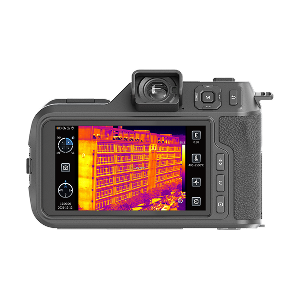
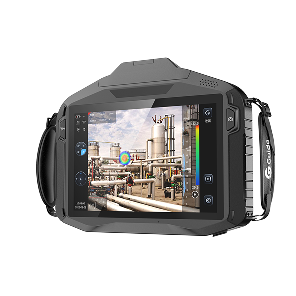
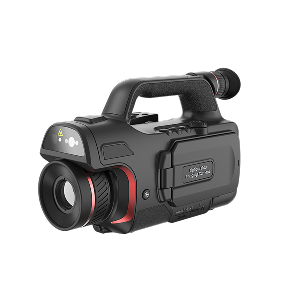
Your Ideal Eagle Eye: A rugged, handheld camera with good sensitivity (NETD <50mK) and a standard lens. Features like voice annotation and alarm flags are hugely beneficial for technicians on the move. Resolution of 320x240 is often the sweet spot.

Scenario 2: Electrical Fault Detective

The Task: Finding loose connections, overloaded circuits, and phase imbalances in panels, switchgear, and transformers.

Your Ideal Eagle Eye: Safety first! A camera with a long enough focal length to maintain a safe working distance. High dynamic range is crucial to avoid "blooming" (where a hot spot washes out the image). The ability to store and report findings is key for compliance.

Scenario 3: Quality Control Sentinel

The Task: Inspecting weld integrity, checking for voids in composites, monitoring filling levels, or verifying PCBA soldering.

Your Ideal Eagle Eye: This often calls for higher resolution (640x480) and potentially a specialized lens. For automated, in-line inspection, you're not looking for a handheld unit, but an integrated thermal imaging core or module—the "brain" of the eagle eye—that can be built into your production machinery.

Beyond the Handheld: The Power of Integrated Vision

This is where the future of intelligent manufacturing truly takes flight. Sometimes, you don't just need a tool in hand; you need an eye on the line. This is the domain of OEM/ODM customization.

What if you need a thermal camera embedded in a drone for inspecting solar farms? Or a compact thermal sensor on a robot arm for 24/7 quality monitoring? Or a non-contact thermometer integrated into an automated assembly process? This requires a partner who can provide the core thermal engine and tailor it to your exact mechanical, electrical, and software specifications.

Why Guide Intelligent Manufacturing (GIM) Is Your Strategic Partner for Vision

This is precisely where a specialist like Guide Intelligent Manufacturing (GIM) shifts the paradigm. As a brand focused on thermal imaging intelligent manufacturing under Wuhan Guide Sensmart Tech Co., Ltd., GIM operates from a position of unique strength.

Think of them not just as a vendor, but as an architect of thermal vision. With an end-to-end infrared industry chain—from core detector chips to final product assembly—they control the entire process. This translates into three massive advantages for you when choosing your "eagle eye":

True Customization & Speed: GIM's large-scale production capabilities and deep technical expertise allow them to excel at personalized OEM/ODM services. Whether you need a modified handheld device or a fully custom thermal module for your specialized equipment, they have the infrastructure to develop and deliver efficiently. They move quickly from "what if" to "here's how."

Cost-Effectiveness Without Compromise: Controlling the core technology stack vertically means they can optimize for performance and price. You get cost-effective, high-performance solutions without the markup of a middleman. This makes advanced thermal vision accessible for more applications.

Application-Specific Expertise: GIM's experience spans demanding fields—from power utilities and industrial manufacturing to scientific research and automotive repair. This means they understand that a thermographer inspecting a wind turbine has different needs from a technician troubleshooting a car's electrical system. They specialize in tailored development, whether it's for a professional thermography camera, a consumer-grade tool, a night vision device, or sophisticated multispectral equipment.

Soaring to a Conclusion: Vision is a Strategy

Choosing the right thermal imager is a strategic decision. It's about investing in a capability that prevents downtime, ensures safety, protects assets, and guarantees quality. Start by asking: What invisible problem do I need to solve? What environment will my "eagle eye" work in? Do I need a handheld tool or an integrated vision system?

By understanding the core specifications and honestly assessing your scenarios, you can narrow the field. And when your needs demand more than an off-the-shelf solution—when they call for a tool adapted perfectly to your workflow—partnering with an end-to-end specialist like Guide Intelligent Manufacturing becomes the most intelligent choice of all. It's how you move from simply seeing heat to gaining truly insightful, actionable vision—the kind that gives your manufacturing operations a decisive, competitive edge.