We take your privacy very seriously and when you visit our website, please agree to all cookies used. For more information about the processing of personal data, you may access to Privacy Statement

253-50.jpg 行业应用
  • Home
  • array(31) {
      ["id"] => string(2) "16"
      ["pid"] => string(1) "0"
      ["siteid"] => string(1) "1"
      ["modelid"] => string(1) "1"
      ["cate_modelid"] => string(2) "20"
      ["name"] => string(8) "About Us"
      ["subname"] => string(8) "About Us"
      ["url"] => string(19) "/about-us/about-gim"
      ["command"] => string(1) "1"
      ["position"] => string(7) "0,1,0,0"
      ["usedata"] => string(0) ""
      ["usecategory"] => string(1) "1"
      ["sort"] => string(1) "8"
      ["create_time"] => NULL
      ["update_time"] => NULL
      ["danye"] => string(1) "0"
      ["open"] => string(1) "0"
      ["use_categoryid"] => NULL
      ["ext_data"] => string(7) "array()"
      ["single"] => string(1) "0"
      ["keywords"] => string(8) "About Us"
      ["description"] => string(8) "About Us"
      ["page"] => string(0) ""
      ["can_static"] => string(1) "1"
      ["path"] => string(2) "16"
      ["static_name"] => string(0) ""
      ["seo_title"] => string(8) "About Us"
      ["custom_url"] => string(8) "about-us"
      ["spec_modelid"] => string(1) "0"
      ["route"] => string(0) ""
      ["route_inner"] => string(0) ""
    }
    
  • About Us
  • array(31) {
      ["id"] => string(2) "24"
      ["pid"] => string(2) "16"
      ["siteid"] => string(1) "1"
      ["modelid"] => string(1) "1"
      ["cate_modelid"] => string(2) "21"
      ["name"] => string(4) "News"
      ["subname"] => string(4) "News"
      ["url"] => string(27) "/about-us/news/company-news"
      ["command"] => string(1) "1"
      ["position"] => string(7) "0,1,0,0"
      ["usedata"] => string(0) ""
      ["usecategory"] => string(1) "1"
      ["sort"] => string(1) "1"
      ["create_time"] => NULL
      ["update_time"] => NULL
      ["danye"] => string(1) "0"
      ["open"] => string(1) "0"
      ["use_categoryid"] => NULL
      ["ext_data"] => string(7) "array()"
      ["single"] => string(1) "0"
      ["keywords"] => string(4) "News"
      ["description"] => string(4) "News"
      ["page"] => string(0) ""
      ["can_static"] => string(1) "1"
      ["path"] => string(5) "16,24"
      ["static_name"] => string(0) ""
      ["seo_title"] => string(4) "News"
      ["custom_url"] => string(4) "news"
      ["spec_modelid"] => string(1) "0"
      ["route"] => string(0) ""
      ["route_inner"] => string(0) ""
    }
    
  • News
  • array(31) {
      ["id"] => string(3) "275"
      ["pid"] => string(2) "24"
      ["siteid"] => string(1) "1"
      ["modelid"] => string(2) "36"
      ["cate_modelid"] => string(2) "21"
      ["name"] => string(21) "Industry Applications"
      ["subname"] => string(21) "Industry Applications"
      ["url"] => string(26) "/about-us/news/application"
      ["command"] => string(1) "1"
      ["position"] => string(7) "0,1,0,0"
      ["usedata"] => string(0) ""
      ["usecategory"] => string(1) "1"
      ["sort"] => string(1) "1"
      ["create_time"] => NULL
      ["update_time"] => NULL
      ["danye"] => string(1) "0"
      ["open"] => string(1) "0"
      ["use_categoryid"] => NULL
      ["ext_data"] => string(7) "array()"
      ["single"] => string(1) "0"
      ["keywords"] => string(21) "Industry Applications"
      ["description"] => string(21) "Industry Applications"
      ["page"] => string(1) "6"
      ["can_static"] => string(1) "1"
      ["path"] => string(9) "16,24,275"
      ["static_name"] => string(0) ""
      ["seo_title"] => string(21) "Industry Applications"
      ["custom_url"] => string(11) "application"
      ["spec_modelid"] => string(1) "0"
      ["route"] => string(14) "/Cn/Lists/news"
      ["route_inner"] => string(22) "/Cn/Lists/news_detail/"
    }
    
  • Industry Applications

Seeing the Heat: How Infrared Thermal Imagers Power Smarter Laser Processing

Release Time 2025-12-30

Seeing the Heat: How Infrared Thermal Imagers Power Smarter Laser Processing

Let’s talk about something invisible. No, not magic—but something just as powerful in modern factories. It’s heat. In the precise, high-stakes world of laser cutting, welding, cladding, and additive manufacturing, heat isn’t just a byproduct; it’s the entire story. And if you can’t see the story unfolding, you’re flying blind. So, how do we pull back the curtain? The answer lies in a technology that lets us see the thermal signature of everything: the infrared thermal imager. This isn't just about taking pretty heat maps; it's the foundational sense for intelligent manufacturing.

The Invisible Hand of Heat in Laser Processing

Think of a laser as the most precise and powerful sculpting tool imaginable. It can cut through steel like butter, fuse titanium atoms together, or build a part layer by microscopic layer. But this process is governed by heat. The wrong temperature at the wrong point can lead to a cascade of problems: warping, micro-cracks, residual stress, or a weak weld seam. For decades, operators relied on experience, post-process inspection, and a bit of guesswork. It was reactive, costly, and prone to error. What if the manufacturing process could seethese thermal changes in real-time and adjust itself? That’s the leap from automated to intelligent.

Infrared Thermal Imaging: The "Thermal Eye" on the Production Line

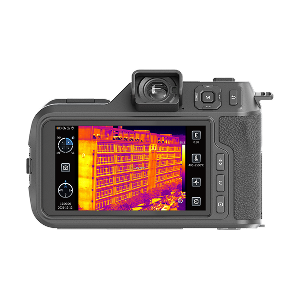
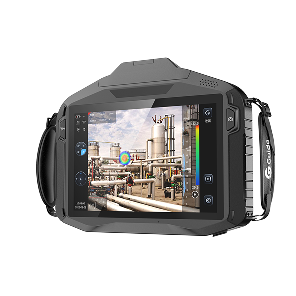
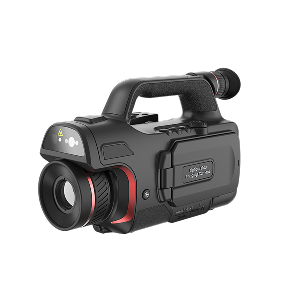
An infrared thermal imager is essentially a specialized camera that detects infrared radiation (heat) emitted by all objects. It translates this radiation into a visual image—a thermogram—where different colors represent different temperatures. In a laser processing setup, this "thermal eye" is trained directly on the interaction point between the laser and the material.

From Blur to Clarity: More Than Just a Hot Spot

Early thermal sensing could tell you something was "hot." Modern thermal imagers, however, provide a high-resolution, quantitative temperature map. We’re talking about the ability to distinguish a temperature difference of less than 20 millikelvins across a microscopic weld pool, all while a multi-kilowatt laser is blazing away. This is the data backbone of intelligent manufacturing.

The Smart Factory’s Thermal Nervous System: Key Applications

So, how exactly does this thermal vision translate to smarter manufacturing? Let’s break it down.

1. Real-Time Process Monitoring & Control: The Ultimate Feedback Loop

This is the heart of the matter. An infrared camera monitors the melt pool temperature during welding or the heat-affected zone (HAZ) during cutting.

Adaptive Power Control: The system can automatically modulate laser power. If the temperature starts to spike beyond the optimal range, indicating potential burn-through, the power is dialed back instantly. If the temp is too low, risking a cold weld, power is increased.

Seam Tracking & Defect Prevention: In welding, inconsistencies in the seam gap or surface contamination cause distinct thermal signatures. The thermal imager detects these anomalies in real-time, allowing the system to adjust path or flag the defect immediately—not after 100 parts are already made.

2. Predictive Maintenance: From "Run-to-Failure" to "Know-Before-It-Blows"

Laser systems themselves are complex and expensive. A cooling line blockage or a degrading lens doesn’t fail instantly; it gets hot first.

Monitoring System Health: Thermal imagers constantly monitor the temperature of laser optics, cooling systems, galvanometer scanners, and power supplies. A gradual, anomalous temperature rise triggers a maintenance alert long before a catastrophic failure causes downtime. This transforms maintenance schedules from calendar-based to condition-based.

3. In-Process Quality Assurance: Every Part is a Good Part

Why wait for a coordinate measuring machine (CMM) or destructive testing at the end of the line?

Weld Penetration Verification: The thermal profile of a weld bead directly correlates with penetration depth. A consistent thermal signature along a weld seam is a strong, real-time indicator of consistent, full-penetration welding.

Cladding & Coating Uniformity: In laser cladding, the uniformity and bonding of the clad layer are critical. Hot spots or cold spots visible on the thermal imager indicate poor fusion or inconsistent material deposition, allowing for immediate correction.

4. Enabling Advanced Additive Manufacturing (3D Printing)

In metal additive manufacturing (laser powder bed fusion), the thermal story is everything. Layer-by-layer, a thermal imager mounted inside the build chamber provides an unprecedented view.

Detecting Porosity & Lack-of-Fusion: These defects have a unique thermal fingerprint as they occur. Intelligent systems can learn these signatures and either adjust parameters for the next layer or mark the part for post-process inspection.

Stress & Distortion Management: By mapping the complex thermal history of a part as it’s built, software can predict residual stress and potential distortion, enabling in-process corrections or pre-emptive design adjustments for the next build.

The Intelligence Behind the Image: Integration is Everything

Seeing the heat is one thing. Making sense of it is where true intelligence emerges. The raw thermal data is fed into a software platform—often powered by machine learning algorithms.

Algorithmic Brains: These systems learn the "perfect" thermal signature for a specific process on a specific material. They create a digital thermal twin of the ideal process. Every subsequent part is compared against this twin in milliseconds.

Closed-Loop Control: The analysis isn’t a report; it’s a command. The software’s decision is fed directly back to the laser’s PLC (Programmable Logic Controller) or the robot’s motion system, creating a closed-loop, self-correcting manufacturing cell. This is autonomous manufacturing in action.

Overcoming the Challenges: It’s Not Just Point and Shoot

Integrating thermal imaging into laser processing isn’t without its hurdles. The environment is extreme.

Intense Interference: The laser plume (the plasma above the melt pool) is incredibly bright and can swamp infrared sensors. This requires precise spectral filtering—using cameras that see in a specific infrared wavelength band where the plume’ emissions are minimized.

High Dynamic Range: A process might involve a 1500°C melt pool right next to room-temperature material. The camera must capture both accurately without blurring or saturation.

Speed and Integration: Processes are fast. Cameras need high frame rates and low latency to keep up. They also need to be ruggedized against vibration, spatter, and smoke, and seamlessly integrated into the machine’s digital architecture (OPC UA, MTConnect, etc.).

Guide Intelligent Manufacturing (GIM): Your Partner in Thermal Vision

This is where specialized expertise becomes non-negotiable. Successfully building this thermal nervous system requires more than just buying a camera. It requires deep knowledge of both infrared physics and manufacturing processes. It requires the ability to customize, integrate, and scale. This is the precise mission of Guide Intelligent Manufacturing (GIM).

As a dedicated brand of Wuhan Guide Sensmart Tech Co., Ltd., under the renowned Guide Infrared Group, GIM operates with a clear focus: to be the thermal imaging partner for intelligent manufacturing. What does this mean for an industry looking to adopt this technology?

Beyond Off-the-Shelf: GIM specializes in personalized OEM/ODM customization. They understand that a laser welding robot for automotive batteries and a giant gantry laser cutter for shipbuilding have wildly different thermal imaging needs. They build solutions, not just sell products.

End-to-End Mastery: With control over the entire infrared industry chain—from detector chips and cores to full camera systems and software—GIM ensures reliability, controls costs, and enables rapid customization. This vertical integration is a game-changer for scalability and innovation.

Core Technology, Built In: Leveraging proprietary core technologies and large-scale production capabilities, GIM can quickly translate a manufacturer’s unique challenge into a cost-effective, robust thermal solution. Speed to deployment is a critical advantage in a competitive market.

The Solution Spectrum: Whether you need a ruggedized, high-speed camera module to integrate directly into your laser cutting head, a specialized software SDK to feed thermal data into your AI analytics platform, or a complete monitoring subsystem, GIM’s team specializes in this tailored development. Their expertise spans the critical areas: from the thermal cores that go into advanced night vision devices and professional thermography cameras, to the innovative sensors needed for next-generation multispectral equipment in research.

The Future is Thermally Aware

The path to true intelligent manufacturing is paved with data. And in the world of laser material processing, the most critical, real-time data stream is thermal. Infrared thermal imagers are the translators, converting the invisible language of heat into a digital dialogue that machines can understand and act upon autonomously. This moves quality control from the end of the line to the very point of creation, transforms maintenance from a scheduled cost to a predictive advantage, and unlocks new levels of precision in advanced techniques like additive manufacturing.

The journey isn't about replacing human expertise, but rather augmenting it with a superhuman sense—the ability to see heat. By partnering with domain experts who can bridge the gap between infrared innovation and industrial application, like the team at GIM, manufacturers can stop guessing and start seeingtheir way to a smarter, more efficient, and more reliable future. The intelligence of the factory floor will, quite literally, be measured in degrees.